
First Steps
Learning to skate is a tricky but rewarding process. It takes lots of time and practice to get right so be ready to push yourself to the limit! To start off, you will need the gear shown above. Skates, helmet, knee pads, elbow pads, and wrist guards. The helmet is essential as falling on skates can cause severe injury. The knee and elbow pads are optional, but strongly recommended for new skaters. For more information on how to wear safety gear visit inlineskates.com’s Safety Gear Tips

Location, Location, Location
After you get your gear together you will need to find a location outside that has soft grass and a concrete sidewalk. The grass will give you a nice place to practice without rolling and it will also come in handy later with emergency stopping if you get out of control. A smooth concrete sidewalk or empty parking lot are the best choices for learning to skate as they give you the space you will need to start and stop.

Balance
It is better to spend some time in the grass to practice balancing on your skates. Stand on both feet for awhile to get a feel for the center of balance on the skate. What does it take for you to fall over? Then try standing on each foot to see how long you can stay there. After you are comfortable standing in the skates you can choose to stay in the grass for now or move to the sidewalk to work on your stance.

Master the Stance
Now that you can balance its time to learn your skating posture. Use the pose above as a reference to mimic the stance for both left and right legs. This is the posture you will take during your strides. This pose is easier to make while moving so don’t worry if you can’t stay balanced for long. Keep your center of gravity low, it is far easier to keep balanced with a lower center of gravity. After you feel confident moving between the left and right poses its time to move!
Time to Move
PintoPonyProductions does a great job at explaining the basic stride. If you follow his movements and remember the stance above, you will be skating in no time! Keep in mind that this takes allot of practice, so don’t expect to be perfect your first time. Keep trying until you feel comfortable propelling yourself forward before you move on. Warning, we have not gone over stopping yet, so be sure to have a grassy spot to roll into after getting too much momentum. Grass is your best friend when it comes to stopping your skates.
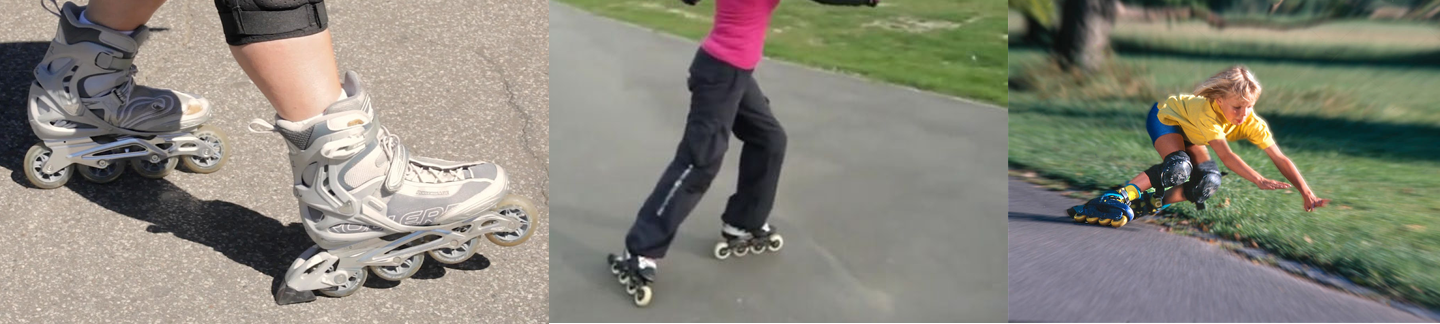
How to Stop
Stopping is the most important thing about skating. There are several options when it comes to stopping, but I will be going over 3: Foot Brake, Drag Stop, and Emergency Stop. Above I have 3 images. The first shows the foot brake which comes with most pairs of roller skates. This is the most basic solution and is easy for beginners. The second option is the drag stop. The drag stop shown above is simply taking one of your skates and dragging the wheels behind you to come to a stop. This technique takes some practice and causes extra ware on your wheels, but is effective. The third option is the emergency stop or bail. When you find yourself going too fast or you have no other option, often the best choice is to roll onto some grass. When rolling into grass you may fall down if it is not dry so be prepared for that, but it is much softer than cement!
Credits:
 rollfree.home.blog
You must be logged in to post a comment.